Boek God

Boek god neemt je mee naar een wereld waarin psychose, geloof en werkelijkheid door elkaar lopen. Wat voor de één toeval lijkt, kan voor de ander een betekenisvol patroon zijn. Kijk daarom niet alleen naar wat waar of onwaar is, maar ook naar wat iemand werkelijk ervaart.

A narrow corridor in an old apartment building, captured in photographic realism, with peeling gray paint and an uneven, scuffed linoleum floor. At the far end, a single closed door is perfectly ordinary, but its shadow stretches unnaturally long across the hallway, bending subtly around a corner as if with a will of its own. The only light source is a flickering fluorescent tube overhead, casting harsh, uneven illumination that alternates between clarity and murk. The camera is placed low, looking straight down the corridor, with strong leading lines pulling the eye toward the door. The atmosphere feels claustrophobic and uncertain, evoking the unsettling experience of everyday spaces becoming distorted through psychotic perception without relying on caricature or horror tropes.

Over Boek God

A worn, dark leather-bound book lies open on a scratched wooden desk in a dim room, its yellowed pages gently curled as if often revisited. One page shows orderly, printed medical diagrams of a human brain; the opposite page is filled with chaotic, hand-drawn symbols and overlapping lines that seem to spill off the margins. A lone metal desk lamp casts a cold, focused beam of light, creating deep shadows that swallow the corners of the room. Photographic realism, shot at eye level with a shallow depth of field so the edges of the book and the distant shelves blur, conveying a tense, introspective mood that hints at the fragile border between clinical understanding and lived inner turmoil of psychosis.
A small, sparsely furnished bedroom at night, photographed in realistic detail, with a neatly made bed and a plain nightstand holding a digital alarm clock and a half-finished glass of water. The room appears ordinary, but the shadows cast by the furniture climb the walls in subtle, almost imperceptible waves, as if breathing. Through thin curtains, the orange glow of a streetlamp seeps in, mixing with the cool blue of a phone screen lying face-up on the bed, its notifications casting faint, shifting reflections on the ceiling. Captured from a corner of the room at eye level, with moderate depth of field, the composition balances stillness and quiet tension, evoking the lonely, sleepless hours when psychotic thoughts and perceptions often feel most intrusive yet remain invisibly internal.

Psychose in verhalen

Een psychose kan voelen als een tweede wereld waarin gedachten, getallen en gebeurtenissen plotseling met elkaar verbonden zijn. Voor anderen zijn deze verbanden vaak niet zichtbaar. Dit deel laat zien hoe groot het verschil kan zijn tussen wat iemand tijdens een psychose beleeft en wat begeleiders in de fysieke wereld waarnemen.

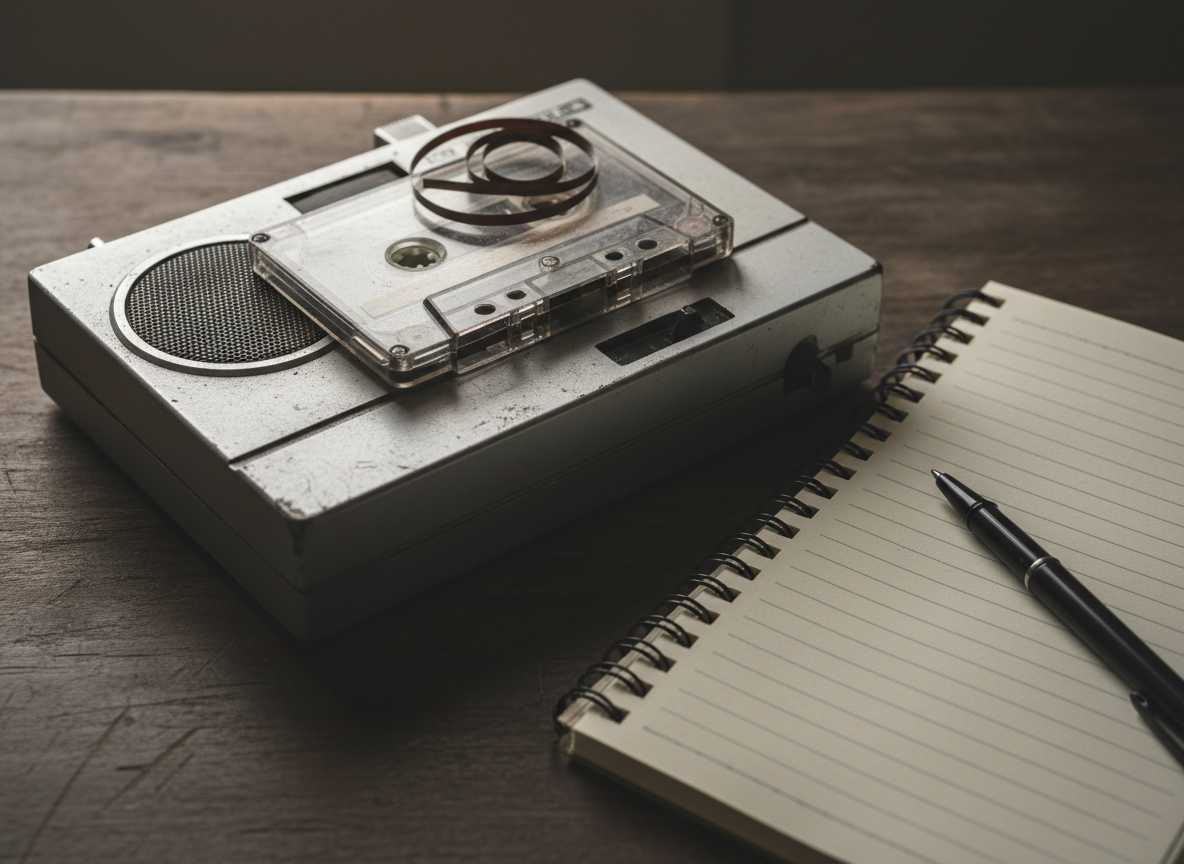
An old tape recorder rests on a dark wooden table, photographed in close-up with hyper-real clarity. Its metal casing is scratched and dulled, the tiny speaker grille dotted with dust. A transparent cassette inside shows tangled, slightly twisted magnetic tape, suggesting years of rewinding and recording. Beside it lies a lined notebook open to a blank page, a pen resting diagonally across as if awaiting words. Soft, overcast light from a nearby window falls across the scene, creating gentle, melancholic shadows and highlighting the fine textures of the materials. Shot from a slightly elevated angle with shallow depth of field so the background fades into an indistinct blur. The mood is intimate and somber, hinting at attempts to document, remember, and make sense of psychotic experiences without showing any people or written text content.